


The four leaf clover is a genetic mutation of the common white clover plant, and its rarity is well documented. This guide covers what it actually is, the real odds of finding one, practical search tips, and where the luck association came from.
1. What Is a Four Leaf Clover?
The common white clover, Trifolium repens, normally grows three leaflets per stem. The plant’s name, Trifolium, reflects this: three leaves.
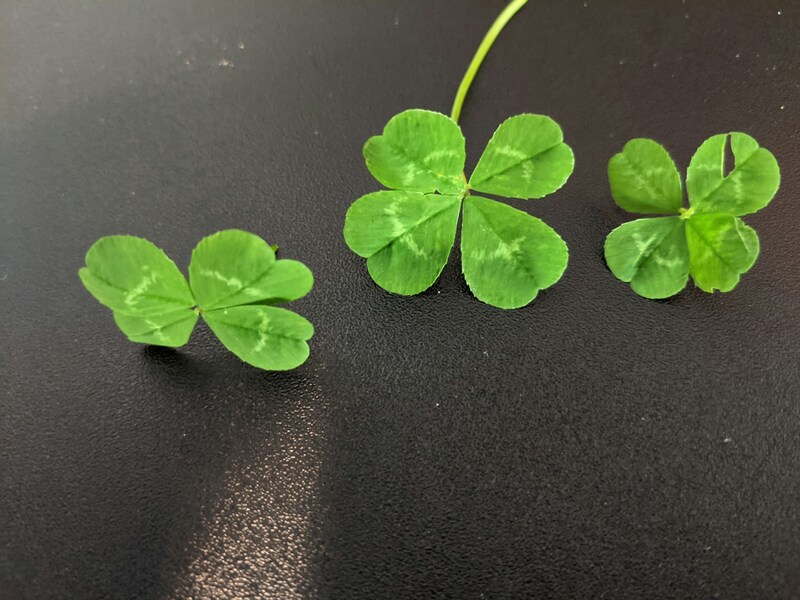
A four-leaf clover is usually a white clover leaf with four leaflets instead of the usual three. The trait appears to involve genetic factors that can be influenced by environmental conditions, which is why some patches produce them more often than others.
The mutation affects the growth of individual leaves rather than the entire plant’s genetics, which is why a single plant can produce both three-leaf and four leaf stems at the same time. The fourth leaf is typically smaller than the other three and may sit at a slightly different angle, which is part of what makes them difficult to spot at a glance.
All four leaflets are the same green color as a standard clover. There is no reliable visual difference between a three-leaf and four-leaf clover from a distance. The count only becomes apparent on close inspection, which is why finding one requires deliberate searching.
2. How Rare Is a Four Leaf Clover?
You may wonder how rare is it to find a four leaf clover, the most widely cited estimate is that approximately one in every 10,000 clover plants produces a four leaf mutation.
A commonly cited estimate is 1 in 10,000, but a large 2017 survey of millions of clovers suggested the frequency may be closer to about 1 in 5,000. The exact odds vary by location and patch.
To put that in practical terms: a typical lawn might contain several thousand clover plants per square meter in a dense patch. Even in a yard full of clover, finding one is not guaranteed in a short search.
The people who find them frequently tend to do so in the same patches where they have found them before, suggesting certain plants or locations are genetically predisposed to producing the mutation at higher rates.
Five-leaf clovers also exist and are rarer than four-leaf clovers. Some commonly cited survey data place them at roughly 1 in 24,000, while six-leaf clovers are much rarer.
3. How to Find a Four Leaf Clover
What are the odds of finding a four leaf clover is a matter of method as much as luck. A few consistent habits improve the odds meaningfully.
- Search where clover is dense. The more plants in a given area, the higher the chance that at least one is producing a mutation. A thick, uncut patch of clover is more productive than a sparse lawn.
- Look in the same spots repeatedly. Some areas consistently produce four-leaf specimens, likely due to local soil conditions or the genetics of the plant colony. If a four leaf clover has been found somewhere before, return to the same patch.
- Soften your gaze rather than scanning individual leaves. Looking for the overall shape of a four leaf clover, slightly fuller or more symmetrical than a three-leaf cluster, is faster than counting leaves one by one. The eye picks up pattern irregularities faster with a wider, relaxed focus.
- Search in the early morning or after rain. Leaves spread more fully when hydrated, and the morning light angle makes differences in shape slightly more visible than in direct midday light.
- Go slowly along the edge of a patch. The outer edges of a clover cluster tend to have more varied growth, including plants producing unusual leaf counts, compared to the dense center.
- Avoid mowing recently cut patches. Freshly trimmed clover has smaller, less distinguishable leaf clusters. Patches that have been left undisturbed for several weeks are easier to search.
>>> Read more: How Many Oz in a Cup? Fluid & Dry Conversions Explained
4. Why Are Four-Leaf Clovers Considered Lucky?
The luck association is old, though its exact origin is difficult to trace precisely. The earliest written record of four-leaf clovers being considered lucky appears in early modern European folklore, with some accounts dating back to the Middle Ages.
Several folklore traditions try to explain why four-leaf clovers became lucky symbols. Some connect them to Celtic protection charms, while others link them to Christian stories such as Eve carrying one from Eden. These stories are popular, but the exact origin of the luck association is difficult to verify.
Celtic tradition associated the number four with protection, balance, and completeness. The clover’s three-leaf form was already tied to the Christian Trinity in Irish culture, with St. Patrick reportedly using it to explain the concept of three-in-one.
A fourth leaf, being a rare deviation from the established symbol, took on meanings of divine grace or good fortune beyond the norm.
By the 19th and 20th centuries, the four-leaf clover had become standardized as a good luck charm across Western cultures, particularly in the United States and Ireland.
It appears on everything from greeting cards to jewelry to sporting team logos as a shorthand for luck, fortune, and the appeal of finding something rare in an ordinary place.
>>> Read more: How Many Seconds in a Day? Quick Explanation and Conversions
5. FAQs
What Does Each Leaf of a Four-Leaf Clover Symbolize?
The four leaves are traditionally said to represent faith, hope, love, and luck. Some versions replace one of these with wealth or prosperity. This symbolism is widely referenced in greeting cards and folklore but does not have a single verified historical source.
Are Shamrocks and Four-Leaf Clovers the Same Thing?
No. A shamrock specifically refers to a three-leaf clover and is the national symbol of Ireland, associated with St. Patrick. A four-leaf clover is a mutation of the same plant with an extra leaf. They are related but distinct.
What Time of Year Are Four-Leaf Clovers Easiest to Find?
Late spring through early summer is the best time, when clover is actively growing and producing full, spread-out leaf clusters. In temperate climates, this means roughly May through July.
Can Clovers Have More Than Four Leaves?
Yes. Five-leaf and six-leaf clovers occur, though they are much rarer than four-leaf clovers. The current Guinness World Record for most leaves on a clover stem is 63, discovered in Japan in 2023.
Can You Grow a Four-Leaf Clover on Purpose?
Not with certainty. Some seed suppliers sell clover varieties that produce four-leaf plants more frequently than wild clover due to selective breeding, but no variety guarantees a four-leaf result.
6. Conclusion
The four leaf clover earns its reputation honestly. At roughly one in 10,000 plants, it is rare enough that most people never find one without looking, and the search itself is part of what gives it meaning.
The luck association has roots in Celtic and Christian tradition, and the four leaves have carried their symbolism of faith, hope, love, and luck into modern culture almost unchanged. Finding one is still a small, genuine win against odds that favor the ordinary three-leaf plant.