
Cleaning the oven is one of those chores that’s easy to postpone. Cleaning an oven can seem like a big job when grease, burnt food, and stubborn stains have built up over time. Many people assume it takes harsh cleaners and a lot of effort.
The good news is that how to clean an oven doesn’t have to be complicated. With the right approach, you can restore your oven efficiently while protecting its surfaces.
1. What to Do Before You Start Cleaning
A little preparation makes the cleaning process easier and helps prevent accidental damage.
Before using any cleaner or self-cleaning feature, check your oven manual because approved cleaning methods can vary by model and finish.
- Turn the oven off and let it cool fully
Cleaning should only begin after the oven is turned off and completely cool, because hot surfaces, steam, or heated cleaner residue can cause burns or irritation. Wait until every surface is completely cool before you begin.
- Remove racks, trays, foil, and loose debris
If you plan to use a self-cleaning cycle, check whether your manual says to remove the racks first, since standard racks can discolor or become harder to slide after self-cleaning.
- Check whether your oven has a self-cleaning setting
If you’re learning how to clean an oven, your appliance may include a self-cleaning or steam-cleaning cycle.
Check the owner’s manual first, remove anything the manual tells you to remove, and avoid using commercial oven cleaner before or during a self-cleaning cycle unless the manual specifically allows it.
Some manufacturers warn that commercial oven cleaners can damage self-cleaning oven surfaces.
- Avoid abrasive tools on glass or delicate finishes
Steel wool, metal brushes, and harsh abrasive pads can scratch glass, enamel, stainless steel, and other delicate finishes. Instead, use a soft sponge or microfiber cloth whenever possible.
2. How to Clean an Oven Quickly
If you’re looking for how to clean an oven quickly, focus first on loose crumbs, fresh spills, the door glass, and any visible grease you can remove without a long soak. This approach reduces repeated wiping and saves time.
Cleaning the Oven Door
If you’re looking for how to clean an oven door, clean the glass separately from the oven interior so you can remove grease and baked-on splatters more effectively.
Step 1: Make sure the oven is completely cool before cleaning.
Step 2: Apply a cleaner approved for your oven door glass, or use a baking soda paste. Avoid spraying cleaner into vents, gaps, seals, or controls.
Step 3: Let the cleaner sit only as long as the product label or oven manual recommends. For baking soda paste, 10 to 15 minutes is a reasonable starting point for light buildup.
Step 4: Wipe the glass with a damp microfiber cloth or non-scratch sponge using gentle circular motions.
Step 5: Buff the glass with a clean, dry cloth until it’s clear and streak-free.
>>> Read more: How to Get Food Coloring Off Skin? Easy Ways
Cleaning Oven Racks
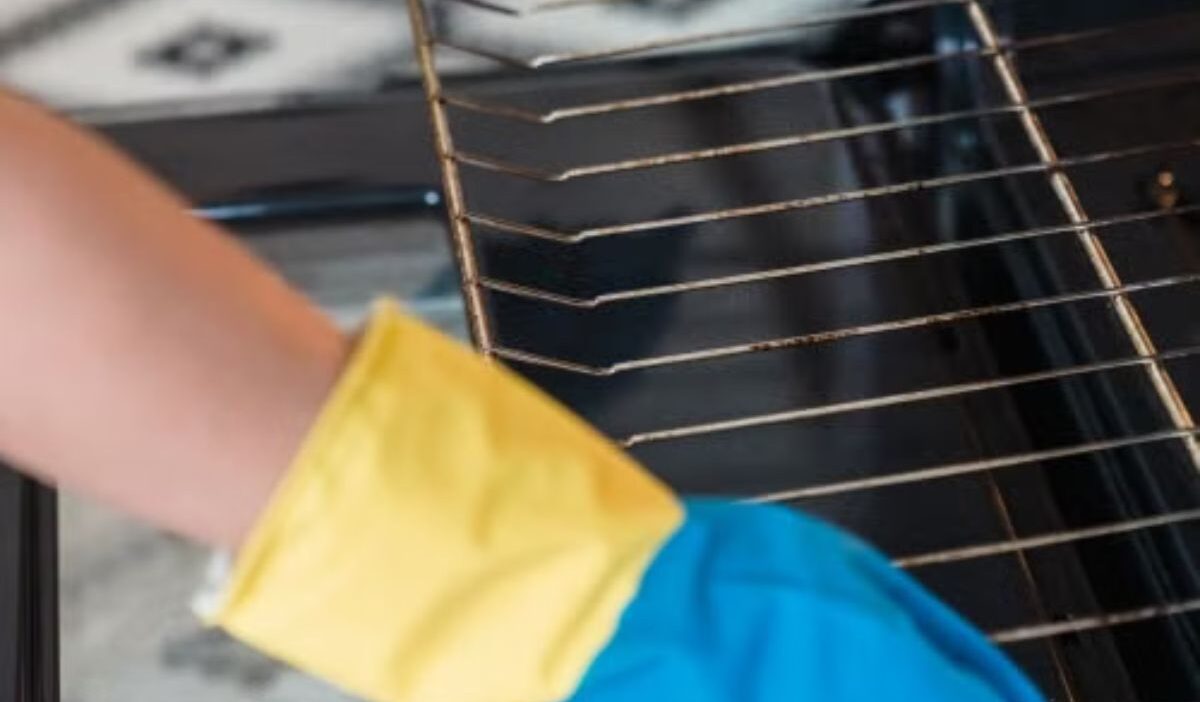
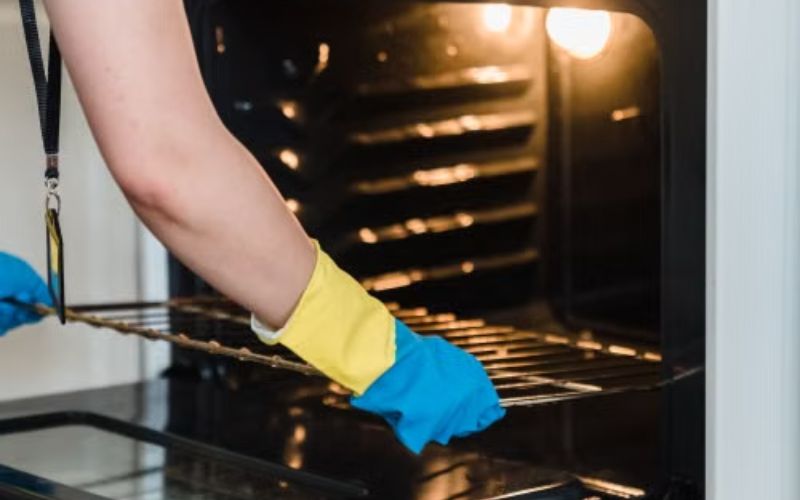
If you’re learning how to clean an oven, don’t forget the oven racks. Soaking them before scrubbing helps loosen baked-on grease and food residue, making them much easier to clean.
Step 1: Remove the oven racks and place them in a sink, bathtub, or large container.
Step 2: Fill the container with warm water and add a few drops of dish soap.
Step 3: Let the racks soak for 20 to 30 minutes, or longer for heavy buildup.
Step 4: Use a non-abrasive sponge or soft brush to scrub away loosened grease and residue.
Step 5: Rinse the racks thoroughly with clean water and dry them completely before placing them back in the oven.
3. No-Oven-Cleaner Method
If you prefer how to clean an oven without oven cleaner, common household ingredients can often remove light grease and baked-on residue without strong chemical odors.
Step 1: Combine baking soda with a little water until it forms a thick paste.
Step 2: Spread the paste over greasy or baked-on areas, avoiding heating elements, fans, vents, gas openings, light sockets, and door seals.
Step 3: Let the paste sit for several hours or overnight if the stains are particularly stubborn.
Step 4: Wipe away the paste with a damp microfiber cloth.
Step 5: Wipe away leftover baking soda with a damp cloth. If needed, lightly mist with white vinegar to help loosen baking soda residue, but do not use vinegar together with bleach, ammonia, or other cleaning chemicals.
Ventilation note: Keep the kitchen well ventilated when using commercial cleaners, vinegar, or a self-cleaning cycle, and keep children and pets away from the area while you clean.
4. What Not to Do When Cleaning an Oven
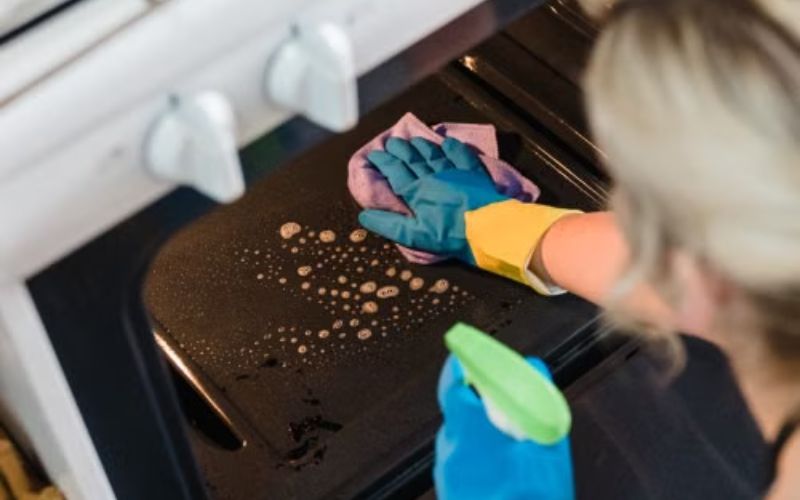
When learning how to clean an oven, knowing what to avoid is just as important as knowing what to do. A few simple precautions can help protect your oven and make the cleaning process safer.
Do not mix random cleaning chemicals: Mixing products such as bleach with ammonia or bleach with acidic cleaners can create toxic fumes that irritate the eyes, throat, and lungs. Always use cleaning products exactly as directed.
Do not use metal scrapers on glass: Unless your oven manual specifically allows it. Metal tools can scratch or damage some glass and finishes, so a plastic scraper, soft cloth, or non-scratch sponge is safer for most models.
Do not spray cleaner directly on heating elements, fans, vents, or gas openings: Cleaner residue can damage parts, cause odors, or create smoke the next time the oven heats.
Do not run self-cleaning mode without reading the oven manual: Different oven models have different instructions and safety recommendations for the self-cleaning cycle.
Do not leave cleaning residue before cooking: As you learn how to clean an oven, finish by wiping all surfaces with a clean, damp cloth to remove any remaining cleaner before using the oven again.
>>> Read more: How to Get Rid of Textured Skin? Simple Skincare Tips
5. FAQ
How often should you clean your oven?
It depends on how often you cook. For most households, cleaning the oven every three to six months helps prevent grease buildup. If food spills frequently, clean those areas as soon as the oven has cooled.
Is it safe to cook right after cleaning the oven?
Yes, once all cleaning residue has been wiped away and the oven is dry. If you used a commercial cleaner or self-cleaning cycle, follow the product label or oven manual before cooking, and ventilate the kitchen if any odor remains.
Can you use vinegar inside an oven?
Yes. White vinegar can help remove baking soda residue and light grease, but it is not a heavy-duty degreaser for thick, baked-on buildup. It works best as part of a gentle cleaning routine rather than as a heavy-duty degreaser.
Why does my oven smoke after cleaning?
Smoke usually occurs because some cleaning solution, grease, or food residue remains inside the oven. Turn the oven off, let it cool, wipe the residue again, and ventilate the kitchen before using it. Wiping all surfaces thoroughly before cooking can help prevent this problem.
Can you clean between the glass on an oven door?
Sometimes, but it may require removing or disassembling the door, which can affect the warranty or damage the door if done incorrectly. Check your manual first or contact a professional if grease is trapped between the glass panes.
Conclusion
Learning how to clean an oven is easier when you break the job into smaller parts: remove loose debris, clean the racks, wipe the door glass, and treat baked-on spots with the safest method for your oven model.
Gentle tools, good ventilation, and careful rinsing help protect the appliance while reducing smoke, odors, and heavy grease buildup. With regular maintenance, each cleaning session becomes less overwhelming.